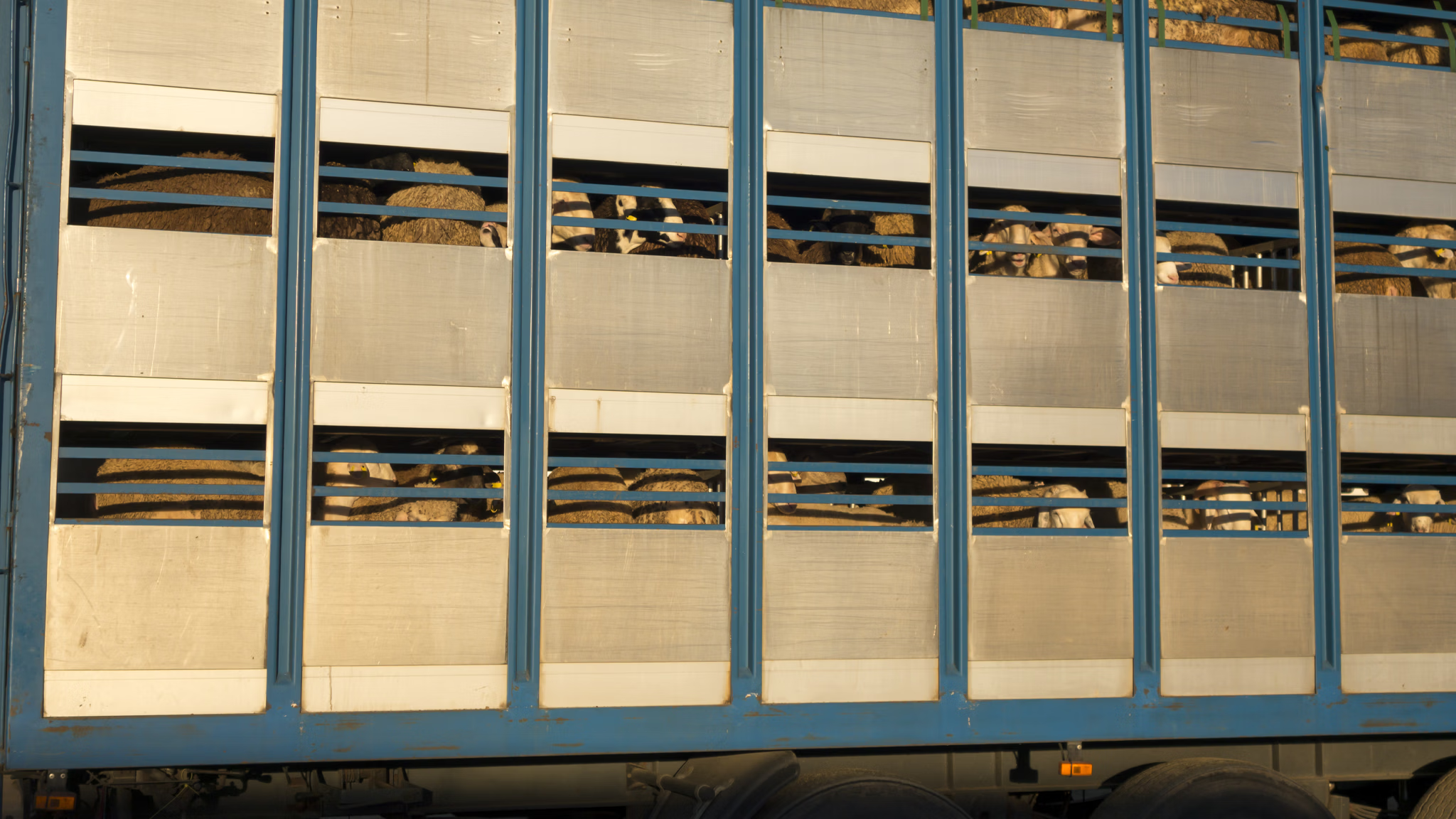
The federal 28-Hour Law says animals may not be confined in a vehicle for more than 28 consecutive hours without being unloaded for at least 5 consecutive hours of feed, water and rest. For livestock carriers, that clock runs on top of hours-of-service rules, species handling needs and biosecurity requirements, so planning and documenting each load matters as much as driving it.
This guide is general information, not legal advice. Check current rules with FMCSA, USDA and your own counsel.
What the 28-Hour Law requires
Under 49 U.S.C. § 80502:
- 28 hours maximum. Animals may not be confined for more than 28 consecutive hours without unloading.
- 5 hours of rest. When unloaded, animals must be placed in pens with feed, water and room to rest for at least 5 consecutive hours.
- Sheep at night. Sheep may be confined for an additional 8 hours when the 28-hour period ends at night.
- 36 hours on request. The owner or person with custody may request in writing, separate from the bill of lading, that the period be extended to 36 hours.
- Exemption. The rule doesn't apply when animals have food, water, space and an opportunity to rest inside the vehicle.
- Penalties. The statute sets a civil penalty of $100 to $500 per violation.
How hours of service and ELDs fit in
Livestock counts as an agricultural commodity under FMCSA's rules, which creates important relief:
- Inside 150 air-miles of the source, driving and on-duty time is not limited by HOS, and drivers don't need an ELD or paper logs.
- Past 150 air-miles, HOS rules apply, and the driver must keep logs with an ELD from the time and place the truck leaves the radius.
- Time inside the radius doesn't count toward daily and weekly HOS limits.
- ELD use. Drivers who exceed the radius more than 8 days in any 30-day period generally need an ELD, with exceptions such as vehicles built before model year 2000.
That means one long load can involve three clocks at once: the animal-welfare clock, the HOS clock once the truck leaves the radius, and the customer's delivery window.
Planning a compliant livestock load
- Start the welfare clock at loading, not at departure.
- Plan rest stops in advance at facilities with pens, feed and water if the trip could approach 28 hours.
- Mark the 150 air-mile boundary on the route so the driver knows when HOS and ELD logging begin.
- Match head count and density to the trailer and species.
- Record biosecurity steps, including trailer washout and disinfection between loads.
- Keep the documents together: health certificates, brand inspections, extension requests and delivery times.
Generic trucking software treats a load as freight. Livestock software should treat it as animals with a clock running. Look for:
- Head-count and species-based dispatch
- Welfare transit timers that alert dispatch before a limit is reached
- Transit windows set per species
- Biosecurity checklists and washout records
- Offline GPS that keeps tracking on rural routes with no signal
- Audit-ready reports for each completed trip
- ELD integration that shows when a load leaves the agricultural exemption radius
How Tracx supports livestock carriers
Tracx was built for North American livestock transportation, with head-count and species-based dispatch, welfare transit enforcement and real-time timers, biosecurity checklists, producer self-service booking and offline-capable rural GPS tracking. It integrates with leading ELD providers so hours of service and welfare time are visible in one place.
See Tracx for livestock carriers.
Frequently asked questions
Does the 28-Hour Law apply to trucks? The statute covers animals transported in a "vehicle or vessel" across state lines. Confirm current USDA enforcement guidance for your operation.
Are livestock haulers exempt from ELDs? Not automatically. Drivers who stay within 150 air-miles of the source don't need an ELD, but HOS and ELD rules apply once a trip goes beyond that radius.
Can the 28-hour limit be extended? Yes, to 36 hours, if the owner or custodian requests it in writing, separate from the bill of lading.
Sources